
THE JEWS OF GREECE
By Tim M. Sigler, Ph.D.
Growing up in the United States, one might think that matzo ball soup and gefilte fish are an essential part of Jewish identity. But that’s not the case in Greece. Rather than the northeastern European inspirations of Ashkenazi Jewry, the cuisine and many other Jewish cultural practices in Greece are much more influenced by Sephardic Jews who were expelled from the Iberian Peninsula in 1492. As one member of the community put it, “We never ate matzo balls or gefilte fish. We ate the whole fish—you don’t ground up whatyou’re not ashamed of!” But the chronicle of this ancient community actually goes back much further than the Late Middle Ages.
THE JEWS OF GREECE
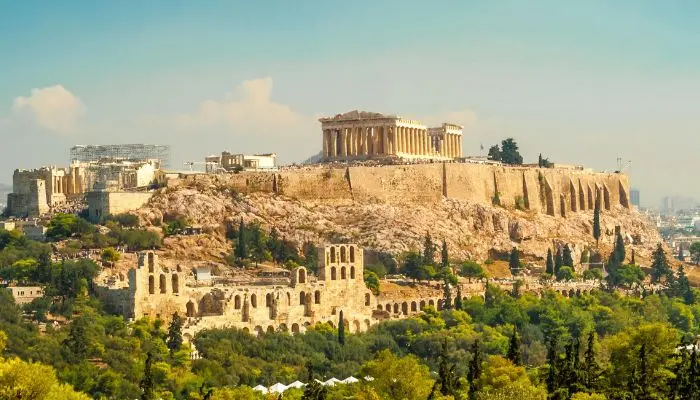
The book of Acts records that when Paul visited Greece, he found well-established Jewish communities in these same places and others.
Jews and Greeks have a long and complicated history of cultural and military interaction. The word “Javan” (Hebrew, Yavan) is mentioned six times in the Hebrew Bible (Gen. 10:2, 4; 1 Chron. 1:5, 7; Isa. 66:19; Ezek. 27:13) and refers both to Javan the individual descendant of Noah’s son Japheth and to Javan the people group from his lineage. Since the letters j, i, and y areoften interchangeable in various alphabetic systems, it is easy to see how the name Javan is associated with the alternatively spelled Ioan from whom theIonians or Greek speakers from westernAnatolia and the Aegean islands derive their name.


