By Jacques Isaac Gabizon
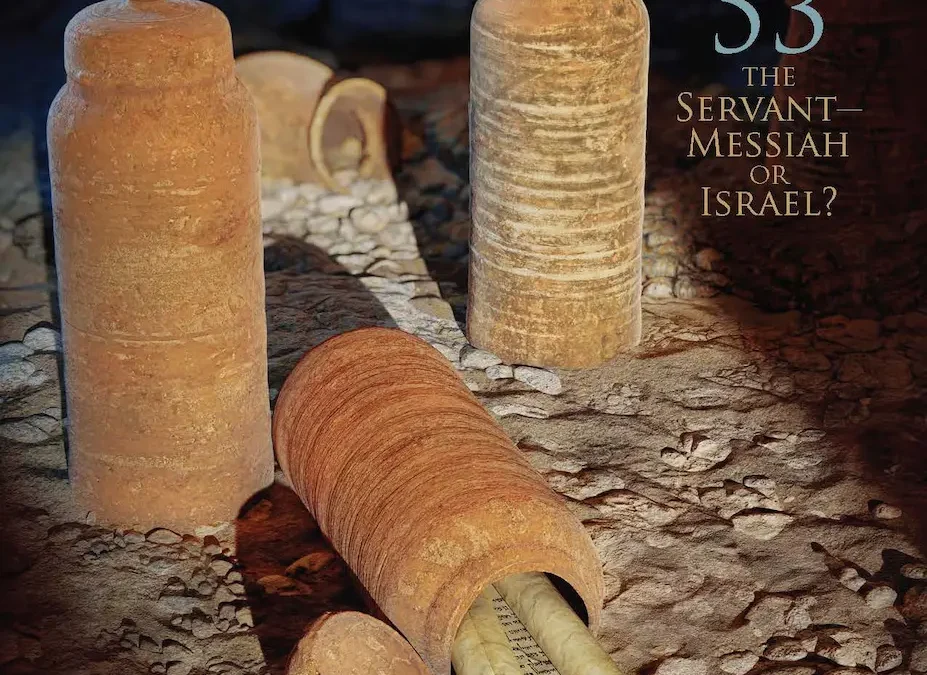
This article originally appeared in Ariel Magazine, Fall 2026, Vol. 1, No. 60. Readers who wish to view the article in its original magazine format may access the complete issue here.
Among all the Messianic prophecies of the Hebrew Scriptures, few passages have received as much attention as Isaiah 52:13–53:12. The opening section, Isaiah 52:13-15, provides a summary of the whole passage.
The Ministry of the Messiah: Prophet, Priest, and King
The passage begins with the words, “Behold, My Servant will prosper” (NASB). The Targum on Isaiah identifies this Servant as the Messiah, rendering the opening words as “Behold, my servant the messiah.”[1] The Hebrew text then uses three expressions to describe the Servant’s exalted position: “He shall be high” (יָרוּם, yarum), “and lifted up” (נִשָּׂא, venissa), “and shall be very high” (גָּבַהּ מְאֹד, vegavah me’od).
It is as though the Spirit were progressively lifting the Messiah higher and higher. He is presented as Prophet, Priest, and King—the three offices that are developed in the subsequent verses. At the same time, the passage introduces a striking paradox: The King comes as a Servant. Although He is the exalted One, He is also the rejected and suffering One: “Just as many were astonished at You, so His visage was marred more than any man, and His form more than the sons of men” (Isa. 52:14).
This is how the text concerning the Suffering Servant begins, about seven hundred years before Yeshua came to earth. Although He would be rejected, He would still accomplish His work. The passage presents the three offices of the Messiah: Prophet, Priest, and King. At His first coming, Yeshua fulfilled the role of Prophet by speaking the Word of God, yet He was rejected and put to death, just as the Scriptures had prophesied.
Verse 15a points to Messiah’s office as Priest: “So shall He sprinkle many nations.” The term “sprinkling” is priestly language, used of the high priest when he sprinkled the atoning blood of the sacrifice before YHWH. Having completed the work of atonement through His death, Yeshua now fulfills His priestly role from heaven, cleansing and interceding for all who receive Him as their personal Savior.
Verse 15b then points to Messiah’s office as King: “Kings shall shut their mouths at Him.” The progression moves from His present priestly ministry in heaven to His future manifestation as King at His second coming. When Yeshua returns, the kings of the earth will be taken by surprise and will stand speechless before Him.
The verse continues, “For what had not been told them they shall see, and what they had not heard they shall consider.” At His return, they will finally recognize that Yeshua is indeed the Messiah.
Isaiah 53 then speaks of the innocent Servant of YHWH who bears the sins of others and brings healing and forgiveness (vv. 4-6). The chapter says that He would be “cut off out of the land of the living,” pointing to His death (v. 8), yet it also says “He shall prolong His days,” prophesying His resurrection (v. 10). For this reason, many believers have seen in Isaiah 53 one of the clearest and most remarkable portraits of the Messiah in all the Hebrew Scriptures. The New Testament writers likewise viewed the ministry of Yeshua through this passage, applying it to His rejection, healing ministry, suffering, death, burial, and resurrection. This pattern can already be seen at the beginning of His public ministry when John the Baptist identified Him as “the Lamb of God.”
Behold the Lamb of God
When John the Baptist proclaimed, “Behold! The Lamb of God who takes away the sin of the world!” (Jn. 1:29), he connected Yeshua to two great pictures from the Hebrew Scriptures: the Passover Lamb of Exodus 12, whose blood protected Israel from judgment, and the suffering Lamb of Isaiah 53:7, the One who would be led “as a lamb to the slaughter.”
It is important to note that Yeshua was called “the Lamb” before He performed a single miracle or preached a public message. From the very beginning, His mission was to bear the sins of others. Isaiah 53 repeats this truth again and again: “Surely He has borne our griefs and carried our sorrows” (v. 4), and “YHWH has laid on Him the iniquity of us all” (v. 6). John’s declaration therefore gives us the key to understanding the whole ministry of Yeshua. He came not only to teach, heal, and comfort people but also ultimately to remove sin through His sacrifice.
The title “Lamb” became one of the most precious names of Yeshua in the New Testament. In the book of Revelation alone, it is used more than thirty times. Even in the final two chapters, which describe eternity, the Lamb is mentioned seven times, reminding us that His sacrifice and redemption will be remembered forever.
Isaiah 53 also introduces the Messiah in a very tender way, presenting Him as a “tender shoot” (v. 2). The Hebrew word yonek describes a nursing infant, a child still dependent on its mother’s milk. In this gentle picture, Isaiah presents the promised Child of Isaiah 9:6: “For unto us a Child is born, unto us a Son is given.” The mighty Redeemer first came in humility, weakness, and tenderness so that through His sacrifice, He might bring salvation to the world.
The Servant Who Bore Our Sins
Isaiah 53 also helps us understand Yeshua’s healing ministry. After Yeshua healed the sick and cast out demons, Matthew directly connected these miracles to Isaiah 53:4: “He Himself took our infirmities and bore our sicknesses” (Mt. 8:16-17). This shows that Isaiah 53 was already being fulfilled during Yeshua’s earthly ministry, even before the cross. His miracles were signs that He truly was the promised Messiah, revealing His authority over sickness, suffering, and the effects of the fall.
However, this passage is sometimes misunderstood. Some believe it means that every believer must receive complete physical healing now in this present life. Yet Matthew applied Isaiah 53 before Yeshua even went to the cross. The point was not that all sickness would immediately disappear but that the Messiah had come to address the deeper root of all suffering: sin itself. The healings of Yeshua were therefore visible pictures of a far greater healing to come. They pointed forward to the day when all the effects of sin, sickness, sorrow, pain, and death will finally be removed forever in the resurrection of believers.
In Isaiah 53, both the problem and the remedy are brought together. In verse 10, the Messiah is presented as the guilt offering, using the Hebrew word אָשָׁם (asham), the sacrifice that restored fellowship with God. Then, in verse 12, we are told that He bore sin. The text uses words from the חטא (ḥṭʾ) word family, including חֵטְא (ḥeṭʾ), “sin,” and חַטָּאת (ḥaṭṭaʾt), which can refer to sin or to the sin offering. In other words, Yeshua both bore the disease and provided the cure.
Isaiah 53 also leaves no doubt that the Servant’s mission would include His death. In verse 8, He was “cut off out of the land of the living.” Then, in verse 12, the text says that “He poured out His soul unto death.”
Throughout the chapter, the words connected to Him are words of suffering: He is described as bearing griefs and sorrows (v. 4), being stricken, smitten, and afflicted (v. 4), being wounded and bruised (v. 5), and being chastised and scourged (v. 5). But the words connected to us are altogether different: peace, healing, justification, and restoration to God (vv. 5-6, 11-12). This is the heart of Isaiah 53:
The Servant suffered so that sinners might be restored to God.
Despised and Rejected
Isaiah 53 foretold not only the suffering of the Messiah but also the rejection He would face from His own people. The chapter opens with the painful question: “Who has believed our report?” (v. 1a). The Gospel of John directly applies this verse to the unbelief that surrounded Yeshua during His ministry: “that the word of Isaiah the prophet might be fulfilled, which he spoke: ‘Lord, who has believed our report?'” (Jn. 12:38a). Although Yeshua had performed many signs before the people, the nation as a whole did not believe in Him (Jn. 12:37-38).
In this way, Yeshua walked the same path as the prophets before Him. The prophets often stood almost alone against the religious systems of their day. Many were rejected, persecuted, and even killed because they faithfully spoke the Word of God. In the same way, Israel’s Messiah was also rejected.
Yet the signs Yeshua performed were extraordinary. Nicodemus, a ruler of the Jews, recognized this significance when he came to Yeshua and said, “Rabbi, we know that You are a teacher come from God; for no one can do these signs that You do unless God is with him” (Jn. 3:2).[2] While some believed, many hardened their hearts. Others believed in Him quietly but were afraid to confess Him openly for fear of being put out of the synagogue (Jn. 12:42). Their fear of men kept them from publicly identifying with the Messiah.
Thus, Isaiah 53 was fulfilled not only through open hatred against the Servant but also through the silence, hesitation, and fear of those unwilling to bear the cost of following Him. Yet even in rejection, the Messiah continued His mission of love, mercy, and salvation, patiently calling people to Himself.
The Innocent One Among Sinners
The fulfillment of Isaiah 53 reached its climax at the crucifixion. According to Isaiah 53:12, the Servant would be “numbered with the transgressors,” and this prophecy was fulfilled when Yeshua was crucified between two criminals (Mt. 27:38).
Yet the scene of the cross also placed the innocent Messiah in the midst of many other guilty men. Barabbas, whose name means “son of the father,” was released, while the true Son of the Father took his place and died instead. Around the events of the crucifixion also stood Pontius Pilate, Herod, Annas, and Caiaphas. Though they searched for some fault in Yeshua, they could find none. In the end, they relied on false accusations and unlawful procedures to condemn the innocent Lamb of God.
Though completely sinless, Yeshua died the death of a condemned criminal. Rome executed Him alongside rebels and lawbreakers as though He Himself were guilty. The Holy One was treated as unrighteous so that unrighteous sinners might receive righteousness before God. This is the heart of Isaiah 53: The innocent Messiah willingly took the place of the guilty. At the cross, the judgment that belonged to us fell upon Him so that the peace and salvation that belong to Him might be offered to us.
The Messiah Forsaken for Us
Perhaps the deepest suffering of the Messiah took place during the darkness that covered the land while He hung upon the cross. At the ninth hour, Yeshua cried out, “My God, My God, why have You forsaken Me?” (Mt. 27:46). With these words, He quoted the opening line of Psalm 22, where David described his own suffering and persecution.
David had been anointed king by Samuel, yet for many years he was hunted by those who sought to destroy him and cut off the royal line of Judah. But in Yeshua, we see One far greater than David. The Messiah stepped into the place not only of David but also of all Israel and indeed of the whole world to bear sin and bring redemption.
Isaiah 53 foretold this judicial suffering when it declared that the Servant would be “smitten by God” (v. 4) and that “it pleased YHWH to bruise Him” (v. 10). On the cross, the relationship between the Father and the Son entered a judicial moment as the Messiah bore the judgment of sin on behalf of humanity. This is seen even in the way Yeshua addressed God. Throughout the Gospels, He spoke of God as “Father.” Yet here, for the only time, He cried, “My God, My God.” His usual language of intimate fellowship gave way to the judicial language of judgment, as the Sin-Bearer endured divine wrath in the place of sinners.
This moment did not go unnoticed. Matthew records that “from the sixth hour darkness fell upon all the land until the ninth hour” (Mt. 27:45). The darkness itself was a divine sign, marking the hour when the Messiah bore the judgment of sin upon the cross.
Isaiah 53:11 then declares, “As a result of the anguish of His soul, He will see it and be satisfied; By His knowledge the Righteous One, My Servant, will justify the many, As He will bear their iniquities.” Here the Messiah is called “the Righteous One,” the צַדִּיק (tzaddik), the perfectly righteous Servant who makes many righteous before God. Throughout the Scriptures, we are reminded that no human being is truly righteous before God (Ps. 14; Ps. 53). But Isaiah 53 points us to the answer. Our righteousness cannot come through our own efforts, religion, or works. It comes only through the work of the Messiah on the cross.
He was forsaken so that we might be accepted. He bore our sins so that we might receive forgiveness. He endured judgment so that we might receive peace with God.
From the Tomb to Triumph
Even the burial of Yeshua fulfilled Isaiah 53 in a remarkable way. Isaiah 53:9 declared, “They made His grave with the wicked, and with a rich man in His death.” Though Yeshua died the death of a criminal, He was buried in the new tomb of a rich man, Joseph of Arimathea (Mt. 27:57-60; Mk. 15:42-46; Lk. 23:50-53; Jn. 19:38-42).
Joseph himself was part of the faithful remnant of Israel. The Gospel of Luke describes him as “a good and righteous man” who was “waiting for the Kingdom of God” (Lk. 23:50-51). By publicly caring for the body of Yeshua, Joseph placed himself in danger. He likely faced rejection and exclusion from the religious community, for the leaders had already threatened those who openly believed in Yeshua with being put out of the synagogue (Jn. 9:22). But Joseph understood that Yeshua was the Messiah and that no earthly status or treasure could compare with Him.
Yet even in burial, the exaltation of the Messiah had already begun. Yeshua was not thrown into a common grave but laid in a new tomb located in a garden. This imagery is deeply meaningful. In the first garden, the Garden of Eden, sin entered the world and death began its reign. In the second garden, the Garden of Gethsemane, the serpent was confronted again—not by the first Adam but by the Last Adam, the One whom 1 Corinthians 15:45 calls “a life-giving spirit.” And in the third garden, the garden of the empty tomb, the work of redemption was vindicated as the Messiah rose from the dead.
This third garden reminds us of the great declaration of the gospel in 1 Corinthians 15:1-4: The Messiah died for our sins, He was buried, and He rose again on the third day.
Even Isaiah 53 points to the resurrection. Verse 10 says, “He shall see His seed, He shall prolong His days, and the pleasure of YHWH shall prosper in His hand.” The wonder of these words is that after His death, the Messiah lives again: “He shall see.” And what will He see? “He shall see His seed.” His seed consists of all those who believe in Him. They are His spiritual offspring, the people redeemed through His suffering and sacrifice. They belong to His body and now bear His name before the world.
Then Isaiah 53:12 gives two beautiful descriptions of the followers of the Messiah: “Therefore I will divide Him a portion with the great, and He shall divide the spoil with the strong.” The Hebrew word rabim, translated “the great,” can also carry the idea of “the many,” pointing to a great multitude. It looks forward to that glorious future day when believers will stand in the presence of the Messiah and share in His inheritance. As Romans 8:17 says, believers are “heirs of God and joint heirs with Messiah.”
Believers are also called atsumim, “the strong.” The Hebrew word speaks of strength, might, and power. John 1:12 states, “But as many as received Him, to them He gave the right [authority] to become children of God.” Believers are strong not in themselves but in the Lord. What awaits them is not shame or defeat but glory, inheritance, victory, and eternal fellowship with the risen Messiah.
Conclusion
In the end, Isaiah 53 stands as one of the clearest and most powerful revelations of the Messiah in all the Hebrew Scriptures. Written centuries before the coming of Yeshua, it foretold His rejection, suffering, death, burial, and resurrection with astonishing detail. Yet this chapter is not only about prophecy; it is about redemption. It reveals the heart of God toward sinners. The innocent Servant willingly took our place so that we might receive forgiveness, healing, righteousness, and peace with God. The Lamb who was despised and forsaken is now risen, exalted, and gathering a people for Himself from every nation. Today, the invitation still remains open: to look upon the Servant, believe in Him, and receive eternal life through Yeshua the Messiah.
Footnotes
[1]. Targum Jonathan on Isaiah 52:13, trans. in The Chaldee Paraphrase on the Prophet Isaiah, London, 1871, accessed through Sefaria, https://www.sefaria.org/Targum_Jonathan_on_Isaiah.
[2]. Some have suggested that the Nicodemus of John’s Gospel may be connected with Nakdimon ben Guryon, a wealthy and prominent Jewish figure mentioned in rabbinic literature (b. Git. 56a), though this identification cannot be stated with certainty.
This article originally appeared in Ariel Magazine, Fall 2026, Vol. 1, No. 60. Readers who wish to view the article in its original magazine format may access the complete issue here.
Copyright © 2026 Ariel Ministries. Originally published in Ariel Magazine, Fall 2026, Vol. 1, No. 60. This article is republished on the Ariel Ministries website with permission. All rights reserved. No part of this publication may be reproduced, distributed, or transmitted in any form or by any means without prior written permission from Ariel Ministries. Permission requests may be directed to corporateoffice@ariel.org.